Thrash metal never learned to slow down
Pull up our Thrash Metal page and the top of the list looks like a history lesson that refuses to end. Forty years after these bands were teenagers wrecking Bay Area rehearsal rooms, Metallica, Slayer, Megadeth, and Anthrax are still the names everyone reaches for first. That is not nostalgia doing the work. Thrash is one of the few metal styles that got faster with age instead of softening, and the reason it keeps its grip is the same reason it was hard to ignore in 1983: it plays like it has somewhere to be.
Punk speed meets metal muscle
Thrash did not come from nowhere, and it did not come from one place. In the early 1980s a handful of kids on both American coasts were listening to two things at once. On one side, the New Wave of British Heavy Metal, Iron Maiden's gallop, Judas Priest's precision, Motörhead's refusal to sit still, and the filthy proto-thrash of Venom. On the other, hardcore punk, which was faster, angrier, and completely uninterested in guitar solos or arena polish.
Thrash is what you get when someone decides they want both. Take the technical bite and twin-guitar attack of British metal, strip away the fantasy and the drama, and drive the whole thing at punk tempo until it feels like the wheels might come off. The scene that formed around this idea planted itself mainly in the San Francisco Bay Area and Los Angeles, with a second front on the East Coast where Anthrax were building the same machine out of New York parts. Glam metal was busy owning the Sunset Strip and MTV. Thrash was the answer from the kids who found all of that ridiculous.
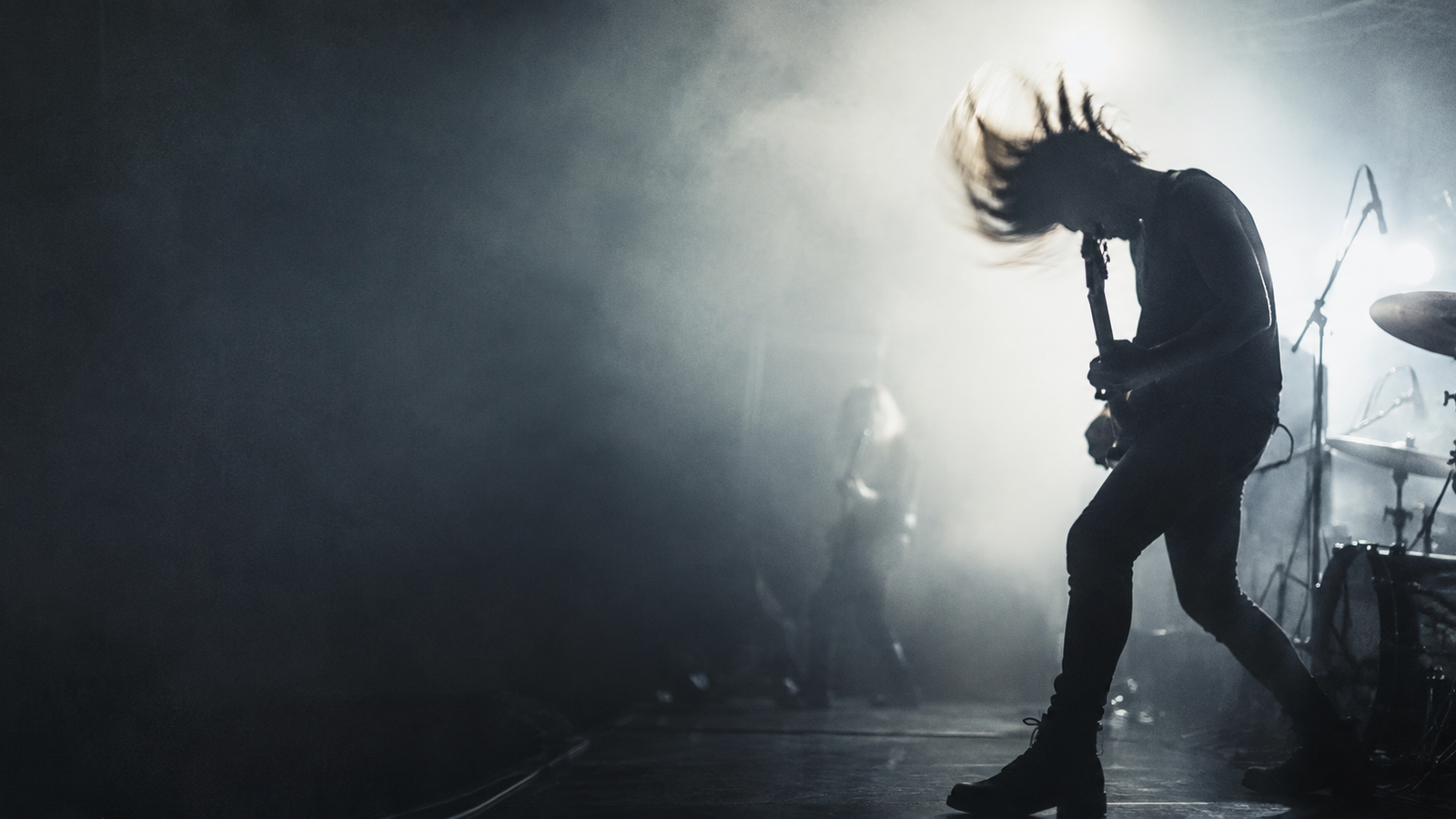
What held it together was an attitude more than a formula. Downpicked riffs played at a speed that punishes your wrist. Drums that gallop and then break into a full sprint. Vocals that bark and sneer instead of soar. And lyrics that traded dragons and groupies for the stuff that actually scared people in the Reagan years: nuclear war, corruption, addiction, the feeling that the adults had lost the plot.
1986, the year it all landed at once
Every genre has a year where the theory becomes undeniable, and for thrash that year was 1986. Within a few months of each other, three of the Big Four dropped the records that still define the genre's ceiling. Metallica released Master of Puppets, an eight-song run that proved thrash could be long, intricate, and emotionally heavy without slowing down. Slayer answered with Reign in Blood, produced by Rick Rubin, a record so fast and so short that it barely clears half an hour and still feels like a car crash you want to sit through again. Megadeth put out Peace Sells... but Who's Buying?, the sound of Dave Mustaine turning a personal grudge into some of the sharpest riff-writing in the style. Anthrax arrived on their heels in 1987 with Among the Living and the New York crossover energy that tied thrash back to the hardcore scene it grew out of.
Three years earlier, Metallica's Kill 'Em All had lit the fuse in 1983. By 1986 the fire was everywhere. These were not underground curiosities anymore. They were records that moved real numbers, filled real venues, and forced the wider metal world to admit that the fast, ugly stuff had craft in it after all.
The sound went global fast
One of thrash's quieter achievements is how quickly it stopped being an American story. Germany built its own scene so distinct that fans gave it a name, Teutonic thrash, harsher and more chaotic than the Bay Area version and proud of it. Kreator, Sodom, Destruction, and Tankard became its own big four, and the fact that all four reunited for a single German festival bill in July 2024 tells you how deep that loyalty runs. Down in Brazil, Sepultura took thrash somewhere rawer and eventually fused it with the sounds of their own country, proving the template could travel anywhere with a cheap amp and something to be angry about.
Back home the bench got deep too. Exodus and Testament held down the Bay Area, Overkill flew the flag on the East Coast, and crossover acts like D.R.I. and Suicidal Tendencies kept dragging the punk half of the family tree back into the room. By the late 80s thrash was not a scene. It was a language, and dozens of bands were fluent in it.
The crash, and why it was always temporary
Then the ground shifted. By the early 90s, grunge and alternative rock rewrote what mainstream heaviness was supposed to sound like, and a lot of thrash bands either chased the change or got left behind by it. Metallica leaned into a slower, cleaner, radio-sized sound and became one of the biggest bands on the planet doing it, which won them a new audience and irritated plenty of the old one. Speed went out of style. For most of the decade the genre that had defined the 80s underground looked like a museum piece.
Here is the thing about writing thrash off, though. People have done it more than once, and it keeps not sticking. A style built on velocity and aggression does not really have an expiration date, because there is always a new set of teenagers who want music that sounds like their patience running out. The bands aged. The itch did not.
The new wave that proved the point
The clearest evidence is what happened in the 2000s and 2010s, when a whole revival showed up that fans started calling the new wave of thrash metal. Municipal Waste made the genre fun again, all skate-punk speed and beer-soaked chaos. Havok, Warbringer, and Toxic Holocaust took the classic Bay Area attack and sharpened it with modern production and modern politics. None of these bands were trying to reinvent thrash. They understood that the original blueprint still worked, and they were right.
The band that pushed hardest against the ceiling was Power Trip. Formed in Dallas in 2008, they welded thrash to hardcore with a conviction that made both scenes claim them, and their 2017 album Nightmare Logic felt like the moment the revival stopped being a throwback and started being the present tense. Then it was cut short. Frontman Riley Gale died in August 2020 at 34, and the loss landed on the whole heavy underground at once, because he was the rare figure both the metal and hardcore worlds trusted. The band eventually returned with a new singer, which is its own kind of testament to how much the music mattered to the people around it.
Why it still sits on top
So when the top of our Thrash Metal page still reads like 1986, that is not the genre standing still. It is the genre being right the first time. Thrash figured out a specific chemistry, punk urgency plus metal precision plus something real to be angry about, and that chemistry has not needed an update in forty years. The Big Four earned their spots by inventing the vocabulary. Every band underneath them, old guard and new wave alike, is still speaking it.
If your picture of thrash froze sometime around the Black Album, our data is the correction. The founders are still headlining, the revival bands are still filling floors, and somewhere right now a kid is discovering that music can go this fast and deciding they need to make some of their own. Thrash never learned to slow down. That was never a flaw. It was the entire point.
Palances Liao is the founder of The Band Index, the rock, metal, and heavy-music discovery platform. Five years in the scene turned into building the tool it needed — band rankings driven by real engagement, a genre map that runs from hard rock through metalcore to deathcore, and festival lineups kept accurate and current. The result is an unusual vantage point: writing grounded not in one critic's taste, but in how the whole scene actually moves. Experience & credentials - 🎧 In rock & metal since 2021 (five years), as founder of The Band Index - 🏗️ Built and runs TBI's band rankings, genre hubs, and festival-lineup coverage - ✍️ Writes TBI's US heavy-festival recaps and the "what is [genre]" explainer series How I work: I only claim first-hand experience of festivals I actually attended; everything else is verified against primary sources and labeled. I follow TBI's Editorial & Sponsored Content Policy. Corrections: [email protected].