Rock Fest 2026 Survival Guide: A First-Timer's Guide to Cadott
Intro
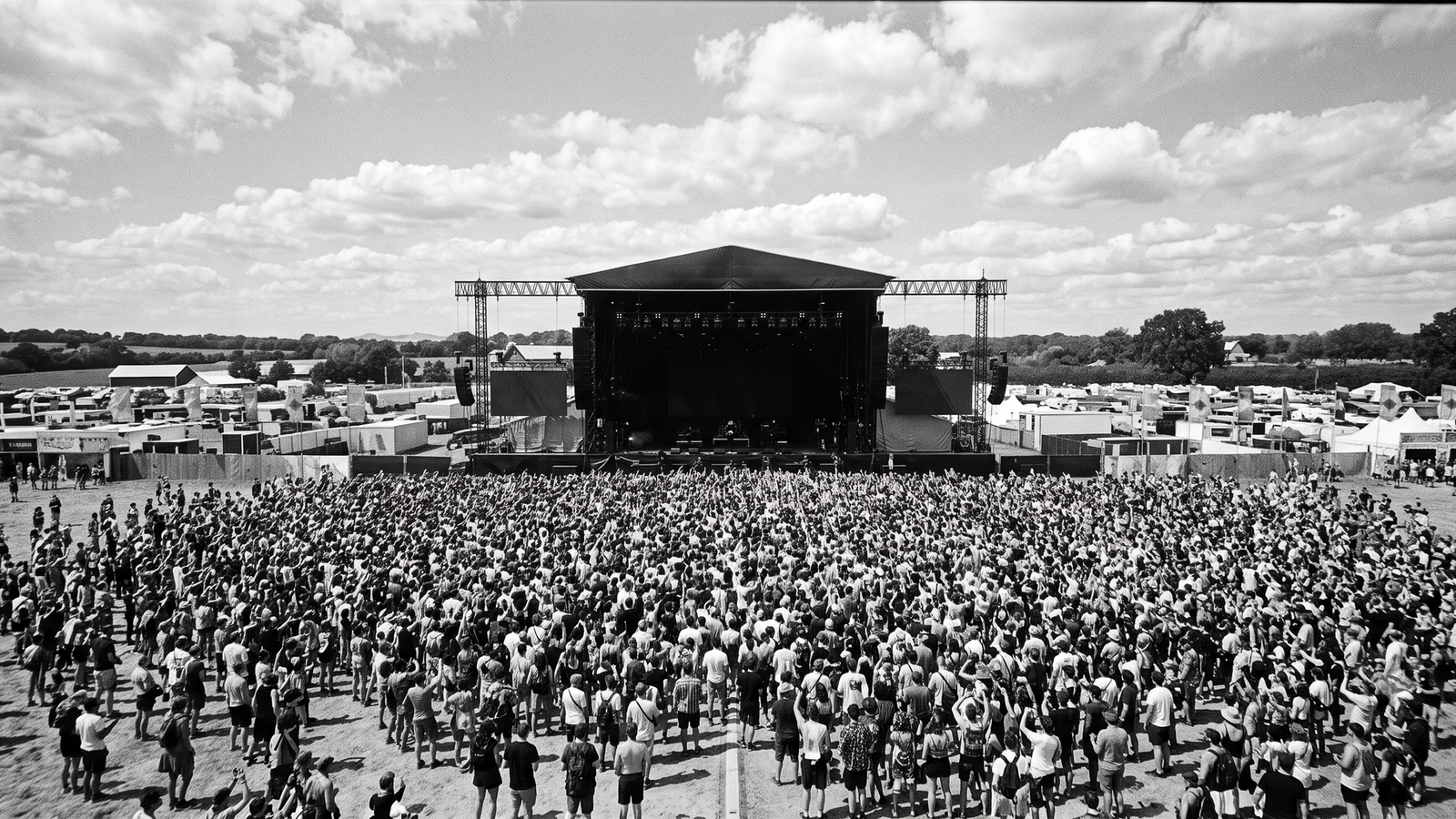
A field in central Wisconsin, 360 acres of it, somewhere north of 7,500 campsites, and a bill that runs from Limp Bizkit to a deathcore band you've never heard of. That's Rock Fest, and if it's your first one, the music is the easy part. The festival is in Cadott, WI, again this year, Thursday, July 16 through Saturday, July 18, 2026, and the people who have a bad time seldom have it because of the lineup. They have it because they showed up at the wrong gate, parked the second car in the wrong place, or learned at 3 a.m. that the campsite next door brought a generator the size of a furnace.
So, before you load the cooler, here's what a veteran would tell you in the parking lot. Dates, camping, the rules that actually bite, and how to plan a weekend you'll remember for the right reasons.
When and where (and the Wednesday nobody mentions)
The grounds sit at 24447 County Highway S, Cadott, WI 54727, in the rural stretch between Eau Claire and the rest of the state. Put that address in your phone, not "Rock Fest," because the festival is the only thing out there and your maps app will occasionally argue with you about it.
The three festival days are Thursday, Friday, and Saturday. The headliners break down like this: Gojira closes Thursday, Limp Bizkit headlines Friday, and The Offspring closes out Saturday. [VERIFY: confirm any night-of stage swaps against the final schedule.]
Here's the part first-timers miss: there's a Wednesday "Bonus Bash" the night before (July 15), and it's exclusive to three-day ticket holders. If you bought the full weekend, you get an extra night of music most single-day buyers never see. If you're deciding between a one-day and a three-day pass, that bonus night is a real thumb on the scale.
Getting there
The nearest airport is Eau Claire, roughly 20 to 30 miles out depending on which part of the grounds you're headed to. Most people drive in — it's that kind of festival — but if you're flying, fly into Eau Claire and sort ground transport from there. [VERIFY: whether an official airport shuttle runs in 2026; it has in past years, but confirm before you bank on it.]
If you're camping, your arrival day matters more than your arrival time. Which brings us to the single most important thing a first-timer can understand about Rock Fest.
Camping, decoded
Rock Fest is a camping festival first and a concert second. The campgrounds are the festival. Get this part right and the rest takes care of itself.
The arrival schedule. Early arrival runs Sunday 10 a.m.–6 p.m. and Monday–Tuesday noon–8 p.m. before the festival week. Rolling in early to set up or drop your rig is free, but you still need your camper sticker to get waved through. The campgrounds officially open Wednesday at 9 a.m., and from that point on, anyone entering needs the full kit: festival wristband, Camp Access Pass, camper sticker, and vehicle sticker. Show up Wednesday morning without one of those four and you'll be sorting it out at the gate while the line builds behind you.
The camping tiers. There are a few, and they're not interchangeable:
- General camping — the default, first-come within your area, no hookups.
- Electric sites — limited, and they go fast. They come with 15- and 30-amp plug-ins, and anyone can reserve one. If you're running anything that needs steady power (CPAP, a real fridge, a window AC unit in July heat), this is the one to grab early.
- VIP camping — closer, with the upgraded perks.
- Glamping — for people who want to see Limp Bizkit and still sleep in a real bed. Tents are pre-set; you just show up.
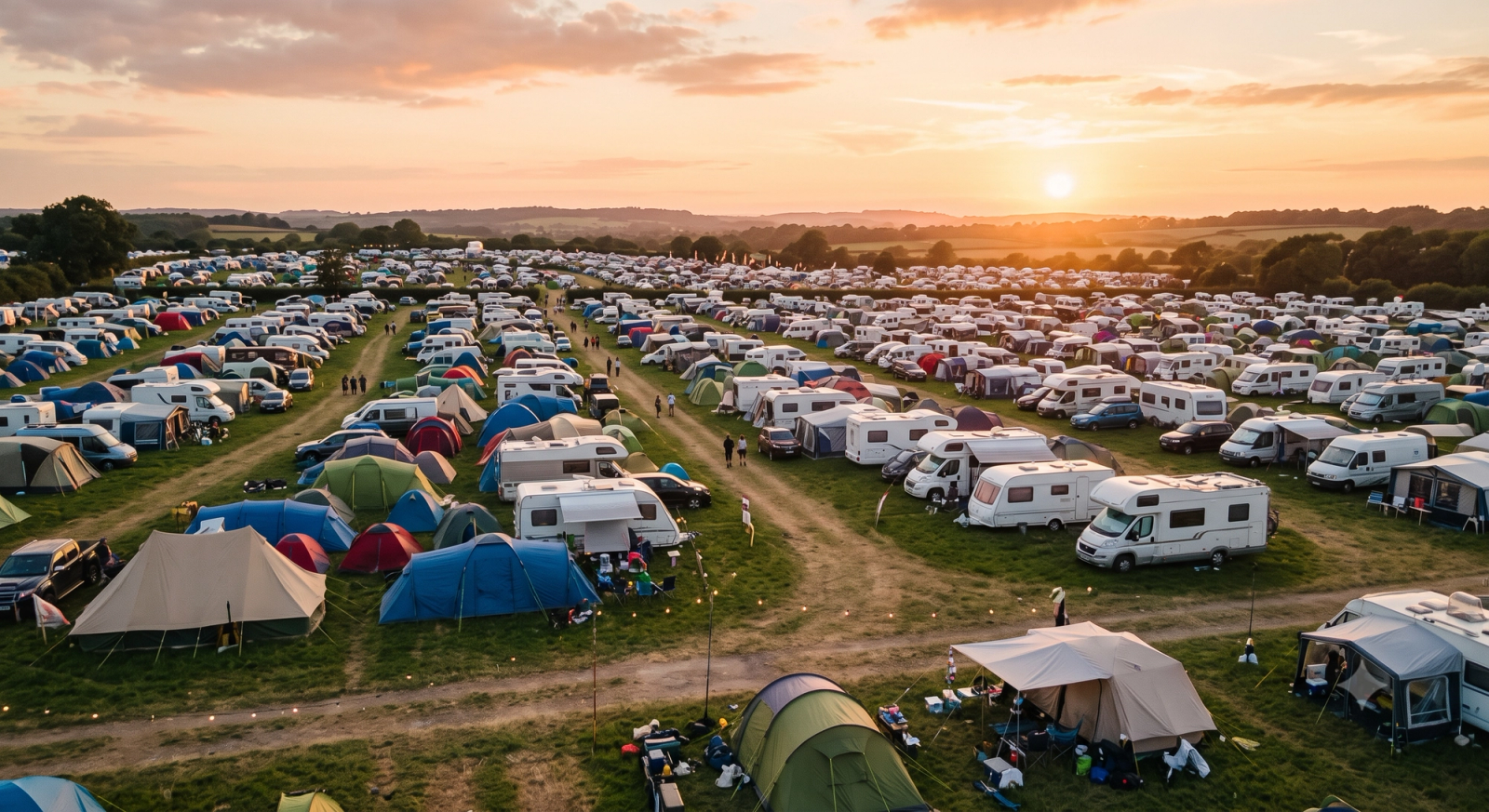
The parking-pass trap — read this twice. Each campsite allows one sleeping unit (tent, RV, or camper) and one vehicle. That's it. Bring a second car and it does not get to sit at your site — it needs its own parking pass and lives in the general parking lot for the duration. Carpool if you can. And if you're using a day parking pass instead of camping, note that 1-day parking vehicles have to be out of the general lot by 10 a.m. the next morning, so it's not an overnight workaround.
The campground rules that actually bite
These are the ones that turn a good weekend into a bad one if you don't know them going in.
Generators and quiet hours. Quiet hours run 2:30 a.m. to 7 a.m. A loud generator — anything over 60 dB measured at 10 feet — has to be off during those hours. A quiet generator (60 dB or under at 10 feet) can run around the clock. If you're depending on power overnight, that decibel line is the difference between sleeping and getting a 3 a.m. visit. Buy quiet, or buy electric.
Fires. No open fires. Contained fires in a fire ring only, and you have to actually be there tending it — same goes for grills. Don't walk off and leave one going.
Showers and dump stations. Showers are free, open 24 hours (minus cleaning windows), and located in the Heathen's Hwy and The Dark Side campgrounds. Go off-peak — nobody's in line at 7 a.m. Dump stations are free on-site, and if you'd rather have someone pump your rig you can schedule it by phone.
Bring your supplies in with you. This isn't a festival where you nip out to a store between sets. Pack your campsite meals, arrive with a full water tank, and clock your fuel level before you pull in. Leaving and re-entering eats hours you'd rather spend in the field.
Inside the concert grounds
The campground rules and the music-grounds rules are two different rulebooks. A few that trip people up:
- Water: empty bottles, Yetis, mugs, and CamelBak-style packs are fine through security — they just have to be empty at the gate. Fill up free at the water-refill stations in front of the Merch Store. In a Wisconsin July, this is not optional; budget more water than you think you need.
- Chairs: bring a lawn chair for the general concert area, but leave the chair bag back at your site or vehicle — the bag doesn't come in.
- Recording: no photo, video, or audio recording gear except your phone. No livestreaming. Leave the camera rig at camp.
Medical crews are on the grounds 24/7, with EMTs circulating through the crowd. Find the nearest medical tent on day one so you know where it is before you need it.
Surviving a Wisconsin July
Daytime highs sit around 75–85°F with real humidity, and afternoon thunderstorms are a normal part of the week, not a disaster. Rock Fest is rain or shine — there are no refunds for weather, so pack like you'll get rained on at least once: a poncho beats an umbrella in a crowd, and a second pair of dry socks is worth more than it sounds. Sunscreen in the morning, water all day, shade when you can find it. The people who melt down by Saturday are usually the ones who skipped breakfast and water on Thursday.
And eat the cheese curds. You're in Wisconsin. It's the law.
Plan your weekend before you go (the part that actually matters)
Knowing the rules gets you in the gate. The other half of a good Rock Fest is not standing between two stages at 8 p.m. realizing your two favorite bands are playing opposite ends of the grounds at the same time. Across the weekend there are dozens of acts, and the clashes are real.
So plan it now. Build your Rock Fest 2026 lineup on The Band Index — add the bands you care about, see set-time conflicts before they happen, and share the plan with whoever you're going with. It's free and takes a couple of minutes.
Not sure who's worth building around yet? Start with our companion piece, Rock Fest 2026: 10 Bands You Can't Miss — the headliners, the acts buzzing on TBI right now, and the underground names worth getting through the gates early for.
Outro
Get the camping right, learn the four things that get you stopped at the gate, drink more water than feels reasonable, and the weekend mostly runs itself. We'll keep this updated as Rock Fest 2026 gets closer, and we'll be back after the weekend with the sets that actually landed.
See you in the field.
Palances Liao is the founder of The Band Index, the rock, metal, and heavy-music discovery platform. Five years in the scene turned into building the tool it needed — band rankings driven by real engagement, a genre map that runs from hard rock through metalcore to deathcore, and festival lineups kept accurate and current. The result is an unusual vantage point: writing grounded not in one critic's taste, but in how the whole scene actually moves. Experience & credentials - 🎧 In rock & metal since 2021 (five years), as founder of The Band Index - 🏗️ Built and runs TBI's band rankings, genre hubs, and festival-lineup coverage - ✍️ Writes TBI's US heavy-festival recaps and the "what is [genre]" explainer series How I work: I only claim first-hand experience of festivals I actually attended; everything else is verified against primary sources and labeled. I follow TBI's Editorial & Sponsored Content Policy. Corrections: [email protected].